Call us Request an appointment

Dental Care for Dogs and Cats in Oakville

Bad breath is easy to write off as just "dog breath." More often, it's the first sign of something we can fix. By the time you can smell it, there's usually disease below the gumline causing your pet real pain, even while they're still eating like nothing's wrong.

A dental cleaning at Trafalgar isn't a quick polish. It's a full medical procedure, done under anesthesia, with the same monitoring and attention we'd give any surgery. 

A healthy mouth is part of a healthy body

Dental disease can pose a significant risk to your pet’s health when left untreated. Around 80% of dogs and cats over the age of three already have some level of dental disease, and it usually hides in plain sight:
  • Dogs who chew on hard toys, bones, or antlers wear down and fracture their teeth, which can lead to painful tooth-root abscesses.
  • Cats develop resorptive lesions, painful spots where the tooth itself breaks down, and many can only be seen on an X-ray.
  • In every pet, plaque builds up over time and turns into infection below the gumline.
Left alone, that infection doesn't stay in the mouth. It eats away the bone that holds the teeth in place, and the bacteria can strain the heart, liver, and kidneys. It's slow, it's silent, and pets are experts at hiding pain. That's why a dental procedure is about protecting your pet's health, not just cleaning teeth.
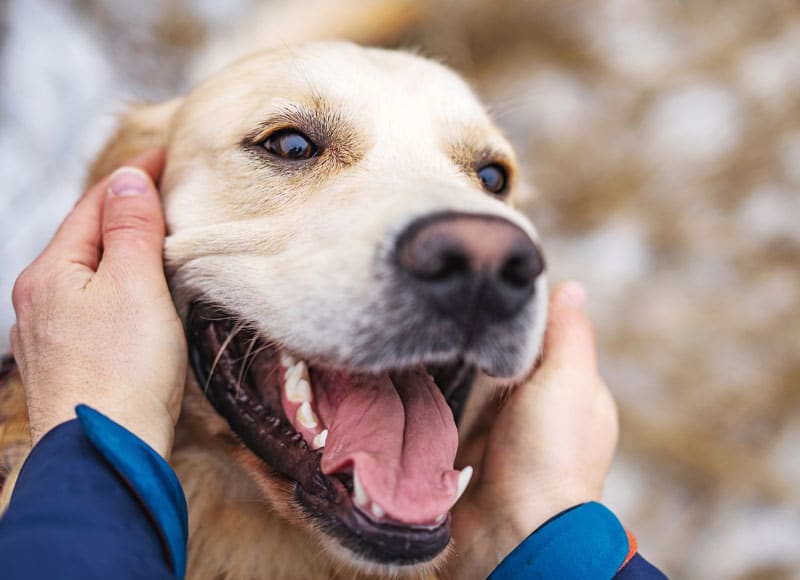
A close-up of a happy golden retriever with its mouth open, being gently held by a person wearing a blue jacket.

What dental trouble looks like at home

Most pets won't let on that their mouth hurts. They'll keep eating, keep wagging, keep acting like themselves, because hiding pain is an old survival instinct that runs deep. So the signs tend to be quiet, and easy to miss.

Here's what to watch for:
  • Breath that just doesn’t smell right
  • Red, swollen, or bleeding gums
  • Yellow or brown buildup along the teeth
  • Drooling, sometimes with a little blood
  • Dropping food, chewing on one side, or losing interest in harder kibble
  • Pawing at the mouth, or pulling away when you touch their face
  • A tooth that looks loose, broken, or discolored
  • A pet who’s quieter, grumpier, or less playful than they used to be
Beyond bad breath, chronic mouth pain often shows up as a change in mood long before it shows up at the food bowl. Pets who perk back up after a dental were usually hurting all along, in a way nobody could see.

If you've noticed any of these signs, it's worth having us take a look. And if you haven't, a routine dental still matters. A mouth that looks healthy and a mouth that is healthy aren't always the same thing.
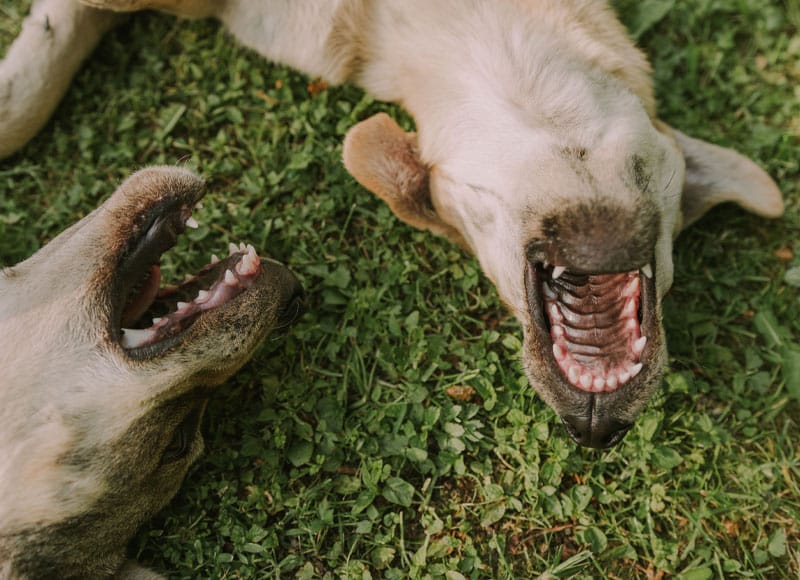
Two dogs lying on their backs on grass, facing each other with mouths open, showing their teeth.

What a dental at Trafalgar actually includes

Anesthesia is only as safe as the team running it. For every dental patient, that means:
  • Pre-anesthetic bloodwork and a physical exam, done a few days ahead, so we know your pet is healthy enough and can tailor the anesthesia to them.
  • An IV catheter and fluids running the whole time, supporting blood pressure and a smoother recovery.
  • A dedicated technician watching your pet for the entire procedure, tracking heart rate, breathing, blood pressure, temperature, ECG, CO2, and oxygen. Their only job is your pet.
  • Full-mouth dental X-rays, because most dental disease hides below the gumline where the eye can’t see it.
  • Comfort medication that starts the night before (to prevent nausea) and calming medication the morning of, so your pet arrives relaxed instead of anxious.
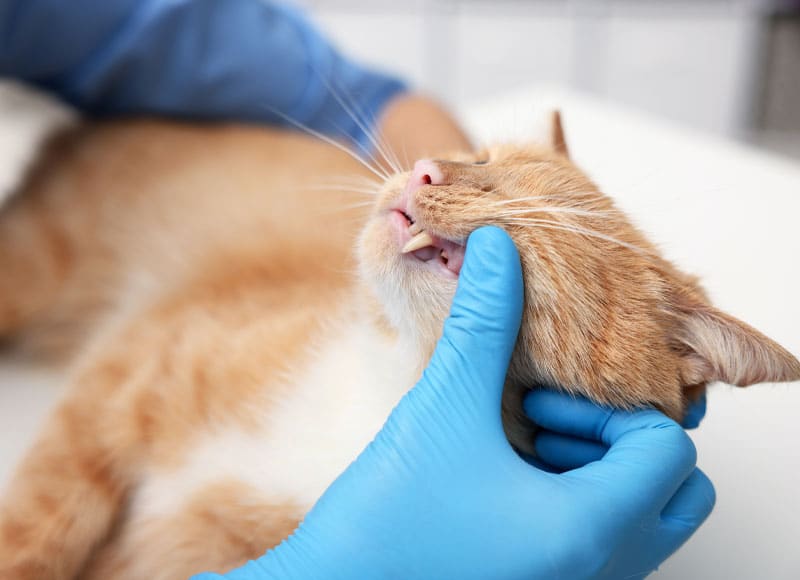
We handle advanced dental work in-house too, including full-mouth extractions and removal of some oral masses. For complex cases, we partner with a trusted local veterinary dentist, so your pet always gets the right level of care.
A person wearing blue gloves examines an orange cat’s teeth, gently lifting its cheek. The cat appears calm and is lying down on a white surface, likely at a veterinary clinic.

Your pet's dental day with us

Trafalgar Animal Hospital is a small, independently owned practice that has been a part of the Oakville community since 1956. You're leaving them with a team who treats them like their own and keeps you in the loop the whole way.

What you can expect:

  • You’re greeted at drop-off, and we take it from there.
  • While your pet waits for their turn, a technician sends you a photo and a text, so you’re not at home wondering.
  • Your pet rests in a quiet ward with soft blankets, calming music, and a pheromone diffuser. Cats get a hiding tent. Our team checks on them and gives them snuggles often.
  • During the procedure, your pet is monitored closely, and the doctor will contact you if we find anything beyond what we discussed and quoted.
  • After the procedure, the doctor texts you personally to tell you how it went.
  • Once your pet is awake and ready, they get a warm canned-food snack.
  • At pick-up, a technician walks you through everything in person, including an easy-to-read chart of any teeth we removed and exactly how to care for your pet at home.
  • The next day, our reception team calls to check on them.

If there were extractions, we'll see your pet again in 7 to 10 days to be sure everything's healing. If at any time you're worried about your pet (not eating, coughing, just not themselves), call us. If we think they should be seen, the recheck is on us.
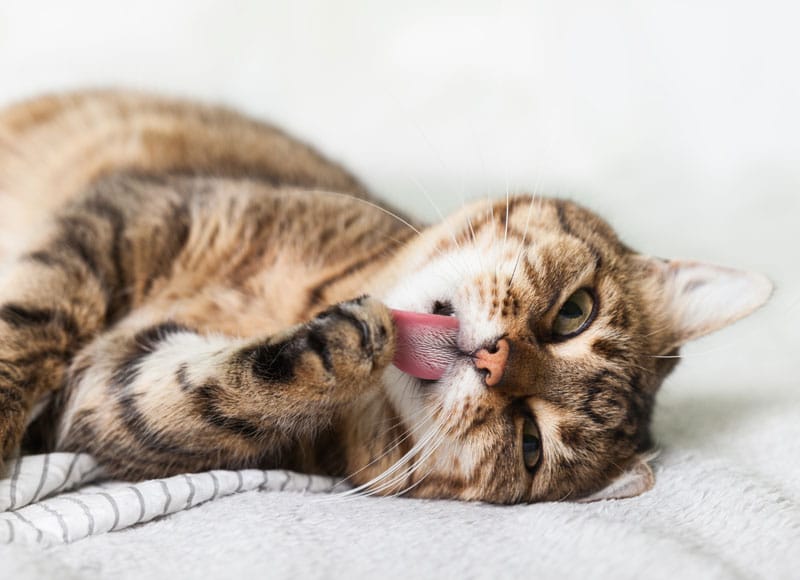
A small, light-colored chihuahua lies on a soft blue knitted blanket with part of the blanket draped over its head. The dog looks at the camera with its mouth slightly open and one ear sticking up. A brown tabby cat lies on a soft surface, licking its front paw while looking relaxed and content.

Caring for your pet’s teeth at home

The best dental care happens between visits. At your recheck, our technician will show you how to brush your pet’s teeth (it’s easier than you’d think!) and start you off with a sample of the water additive we trust.

If daily brushing isn’t realistic,there are other options. Our team would love to talk through what else can help: VOHC approved dental chews, treats, water additives, powders, sprays, and more. Together we’ll build a personalized plan that fits your lifestyle and your pet’s preferences. A little prevention now means fewer procedures later, and it’s all part of your pet’s wellness and preventive care.

What about“anesthesia-free”cleanings?

You'll see groomers and mobile services offer ”anesthesia-free” cleanings, and the appeal makes sense: it sounds safer and cheaper. In practice, it's neither.

Picture it from your pet's side: strangers holding them still while sharp instruments scrape around their mouth, fully awake. It's frightening, it carries a real risk of injury, and there's no way to reach the places disease actually hides, under the gumline and between the teeth. No X-rays are taken, no oral exam or polishing is done. It can make the teeth look cleaner without treating a single real problem. If you're going to invest in your pet's teeth, your money is better spent on something that will actually protect their health.
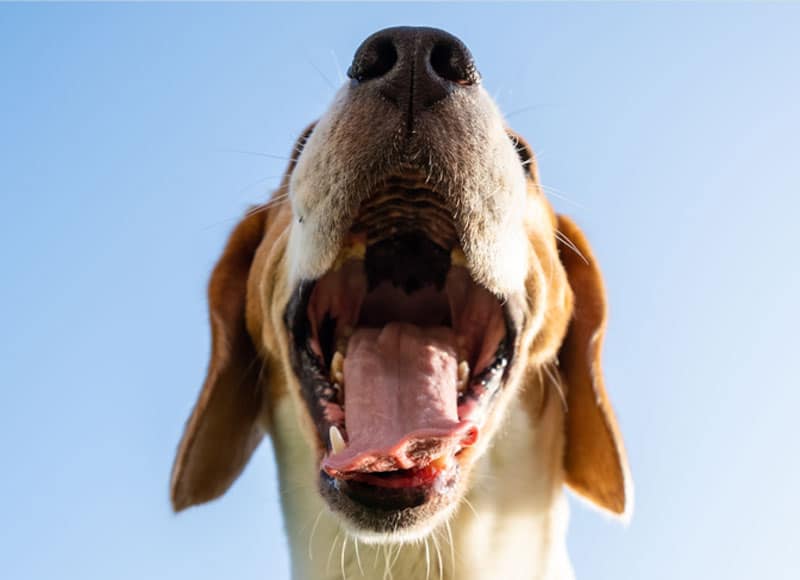
Close-up, low-angle view of a dog with its mouth open wide, tongue out, and nose prominent against a clear blue sky.

Frequently asked questions

Frequently asked questions

Modern veterinary anesthesia is very safe, especially with the precautions we take. Every patient gets pre-anesthetic bloodwork, an IV catheter and fluids, and a dedicated technician monitoring their vitals for the whole procedure, with the anesthesia tailored to your individual pet. For most pets, the risk of leaving dental disease untreated is far greater than the risk of a carefully managed anesthetic.
Because a real cleaning goes under the gumline, takes dental X-rays, and sometimes treats painful disease, none of which a pet will hold still for while awake. Anesthesia lets us do a thorough, pain-free job. It’s also a kinder experience: your pet sleeps through it instead of being restrained and frightened.
It depends on the pet. Some need a cleaning every year, others go longer, and it varies a lot by breed and size. Smaller dogs and certain breeds tend to build up tartar faster and need more frequent care. At each visit we’ll check their mouth and give you an honest read on where things stand, so you’re never guessing. Good home care between visits, like brushing and VOHC-approved chews, can help stretch the time between cleanings.

A dental at Trafalgar Animal Hospital includes IV fluids, full-time monitoring by a dedicated technician, full-mouth dental X-rays, the cleaning, any needed treatment or extractions, pain medication, and a recheck. What every pet needs is different, and costs range based on size, severity of problems, and the amount of time it takes. We’ll always walk you through the estimate before anything happens, and we offer LendCare so you can spread the cost over time if that helps.

It helps more than you’d think. Daily brushing is the single best thing you can do between cleanings, and we’ll show you how. If brushing isn’t realistic, we’ll suggest other options like dental chews and water additives and build a plan that works for you. Something is always better than nothing.

Senior pets are often the ones who benefit most from dental care, simply because they’ve had more years for disease to build up. Age by itself isn’t a reason to avoid anesthesia; what matters is health, not the number on the chart. That’s exactly why we do pre-anesthetic bloodwork and a full exam ahead of time, tailor the anesthesia to your individual pet, and keep a dedicated technician with them the whole way. For an older pet living with mouth pain, treating it is almost always the kinder choice.

Almost always, yes, and usually more comfortably than before. The teeth that come out are the ones causing pain or beyond saving, so removing them takes away a problem rather than creating one. Pets adapt remarkably well, and most go right back to eating normally once they’ve healed, even pets who lose a lot of teeth. Plenty of them act years younger afterward, because they’re finally not hurting. If your pet does need softened food or any adjustment at home, we’ll walk you through exactly what that looks like at pick-up.

Ready to talk about your pet's dental health?

Trafalgar Animal Hospital provides safe, professional dental care for dogs and cats in Oakville, Ontario and surrounding areas from Toronto to Hamilton. If something seems off with your pet's mouth, or you just want a straight answer on where their teeth stand, we're here to help.

Book an appointment or call us at (905) 845-2611. We'll take a look, answer your questions, and give you an honest assessment of your pet's dental health.

Call us Request an appointment
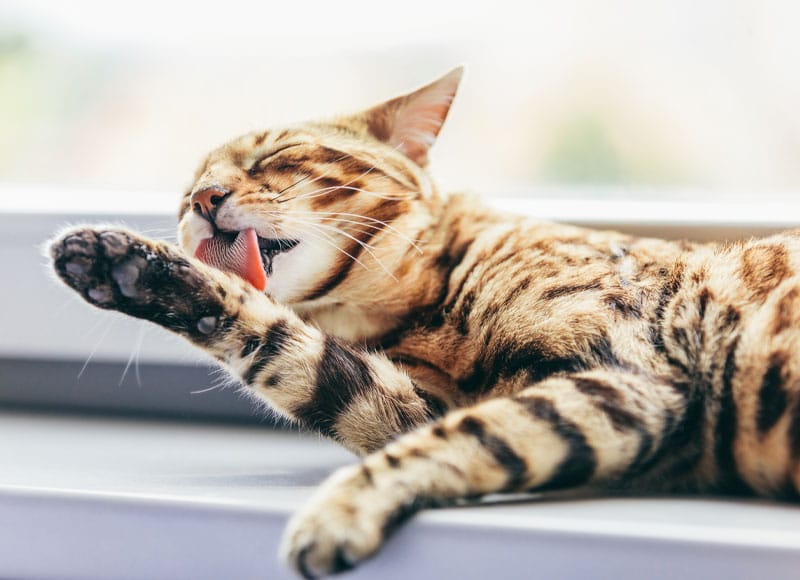
A Bengal cat lies on a windowsill, grooming itself with its tongue out while licking its front paw. Its eyes are closed, and sunlight is shining in through the window behind it.