Call us Request an appointment

Wellness and Preventive Care for Dogs and Cats in Oakville

Your pet seems perfectly healthy, so why bring them in for an annual exam? It's a question we hear a lot! The honest answer: a wellness visit catches the things you can't see yet, while they're still small and easy to fix. A great checkup ends with "everything looks good," and that's exactly the result we're working toward.

More than a checkup A wellness visit is the most underrated appointment in your pet's year. A lot happens that never shows up on the invoice.

During the exam, we're feeling for lumps and bumps, checking joints and muscle, looking in the mouth for the dental disease that affects most pets by middle age, and tracking weight, which is one of the earliest signs that something is shifting. Routine bloodwork can flag changes in the kidneys, liver, or thyroid long before your pet acts sick—giving us more (and less expensive!) treatment options to reach for before things get worse.

Just as important is the conversation. We talk through behaviour, nutrition, breed-related risks, and dental care at home. Our technician will even show you how to brush your pet's teeth and send you home with a sample to get started.

This is also the time to ask us anything. How do I keep my dog from chewing everything, or barking at the neighbour? Why does my cat sometimes pee outside the box? Is this much shedding normal? Bring every question, even the ones that feel too small to mention. A surprising number of them turn out to be early signs of medical problems or issues we can work on through a behavioral consultation. We want to hear them all.

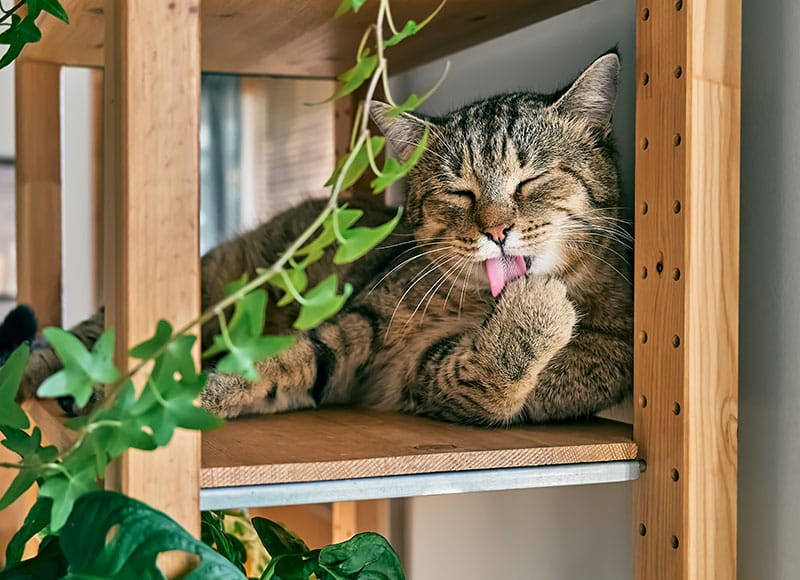
A golden cocker spaniel with wavy fur sits on a woven rug, looking up with a happy expression. A small potted plant is visible in the corner of the image. A tabby cat lounges on a wooden shelf, eyes closed, licking its paw. Green leaves hang nearby, adding a cozy atmosphere to the scene.

Care tailored to your pet's stage of life

Every pet leaves with a plan built for them, not a one-size-fits-all protocol.
  • Puppies and kittens: We focus on a strong start, like behaviour and training, getting comfortable with being handled, and early tooth-brushing habits, alongside their core vaccines and parasite protection. Expect a visit every three to four weeks until they’re at least 16 weeks old. We’ll also talk through timing for spay or neuter and microchipping, and answer any question you have about your new family member.
  • Adults: Once a year, a full exam and a real conversation about anything that’s changed. We usually recommend annual bloodwork to build a baseline of what’s normal for your pet, so we can spot the moment something drifts, and we’ll update vaccines and run parasite tests based on your pet’s lifestyle.
  • Seniors: Older pets get more attention, with bloodwork every 6 to 12 months and time spent on what matters at this stage: arthritis and mobility, cognitive changes, catching disease early, and nutrition. For sore, stiff joints, we’ll talk about rehabilitation and laser therapy as gentle ways to keep your pet moving comfortably.
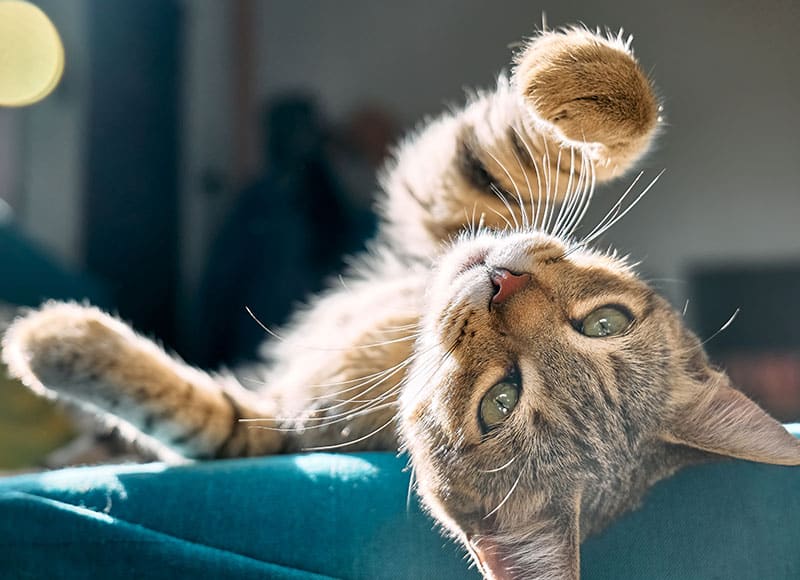
A tabby cat lies on its back on a blue surface, looking at the camera with green eyes and one paw raised playfully. Sunlight shines on its fur, creating a warm and cozy atmosphere.

Vaccines, matched to your pet’s life

Vaccines are the backbone of preventive care, and the right set isn’t the same for every pet. Some protect against diseases serious enough that we recommend them for everyone. Others depend on where your pet goes and what they’re around.

A few aren’t optional. Rabies is required by law in Ontario, and the combination vaccine covering distemper and parvovirus guards against diseases that are widespread and often fatal. Past that core, we look at your pet’s real risk. A dog who hikes, boards, or visits the groomer may need protection against Lyme disease, leptospirosis, or kennel cough. A cat who spends time outdoors may need coverage for feline leukemia. A senior dog who is a couch potato and doesn’t go anywhere just needs the essentials.

We won’t hand you a fixed list or push shots your pet doesn’t need. We’ll talk through what they’re actually exposed to, recommend what makes sense, and tell you why.


The parasite risks around Oakville
Oakville has its own parasite picture, and some of the risks are easy to miss. Ticks are a real one: across Ontario, about 1 in 20 dogs test positive for Lyme disease, and Oakville sits squarely in that risk zone. A quick 4Dx blood test screens for heartworm and tick-borne diseases like Lyme, and a stool sample checks for intestinal parasites including giardia, which spreads easily and isn't always something you'd think to ask about. We'll also help you protect your pet against fleas, ticks, and heartworm with the right prevention for our climate, which is far easier and less expensive than treating an infestation or infection after it takes hold. We tailor all of it to how and where your pet actually lives.
A brown and white dog lies on green grass in a sunny park, looking content with its mouth open. Sunlight streams through the trees in the background.

Why preventive care pays off

Good preventive care is also the most affordable care, because almost everything is cheaper to prevent or catch early than to treat once it's serious. A few examples:
  • A parvovirus vaccine costs a fraction of treating parvo, which can mean days in hospital and is often fatal.
  • Noticing a cat’s weight creeping up lets us step in before it becomes diabetes, with its lifelong insulin and monitoring.
  • Finding a lump while it’s small often means a simple removal, instead of major surgery or a cancer that has already spread.
  • Catching dental disease early means a routine cleaning, instead of painful bone loss and multiple extractions down the road.

Paying attention now is how you avoid the bigger bill, and the harder day, later.
A black and brown dachshund stands on a tile floor indoors, holding a yellow tennis ball in its mouth.

Keeping visits low-stress A frightened pet doesn't get a good exam, and a stressful visit makes the next one harder. We do everything we can to keep visits calm: lick mats with canned food, chicken and liver treats, creamy cat treats, and slow, patient handling. If your cat is happier staying in their carrier, we'll examine them right there. If your pet would feel better with anti-anxiety medication before they even walk in our door, ask us about it. The goal is a pet who doesn't dread coming to see us. A gray tabby cat sleeps peacefully on a white blanket by a sunlit window, with soft light and blurred raindrops visible outside.

A team that knows your pet Trafalgar has been independently owned in Oakville since 1956, and that kind of continuity changes the care. You're working with a team that gets to know your pet and remembers them between visits, so the hard moments are easier when they come.

Here, you're always a part of the decision. You're welcome to ask questions, talk through the options, and decide what's right for your pet and your family. We'll give you our honest recommendation and the reasoning behind it, and we'll never make you feel rushed or railroaded.

A curly-haired brown dog gives a high five to a person with red-painted nails outdoors, with greenery and sunlight in the background.

Frequently asked questions

Frequently asked questions

Because pets are remarkably good at hiding illness, cats especially, and many conditions cause no obvious signs until they’re advanced. A wellness exam and routine bloodwork catch the early, invisible changes, like a small lump, dental disease, early kidney or thyroid changes, or gradual weight gain, when they’re easiest to treat. “Everything looks good” is the goal, not a wasted visit.
For most adult pets, once a year. Puppies and kittens come in more often for their early vaccine and growth checks, and seniors do best with a visit every six months, since a lot can change in a year at their stage of life.
Yes, and it’s most valuable exactly when nothing seems wrong. Baseline bloodwork tells us what’s normal for your individual pet, so when something shifts later, we notice it sooner.
Yes. Indoor pets still age, gain weight, develop dental disease, and hide illness just like everyone else. They’re not fully safe from parasites either: fleas hitch a ride inside, and mosquitoes that carry heartworm get in too. The plan looks a little different for an indoor-only pet, and we’ll build it around their real risk.
Not necessarily. Vaccines are matched to your pet’s age, lifestyle, and risk, and we’ll talk through what makes sense for them. You’re always part of that decision.
For a pet, a year is a long time, and health can change quickly. Skipping visits means we lose the baseline that helps us catch problems early. For seniors especially, we recommend seeing them more often, not less.

Ready to book your pet's checkup? Trafalgar Animal Hospital provides wellness and preventive care for dogs and cats in Oakville, Ontario and surrounding areas from Toronto to Hamilton. Whether your pet is due for a checkup or you're starting fresh with a new puppy or kitten, we'd love to meet them.

Book an appointment or call us at (905) 845-2611, and we'll help you build a plan that keeps your pet healthy for years to come.

Call us Request an appointment
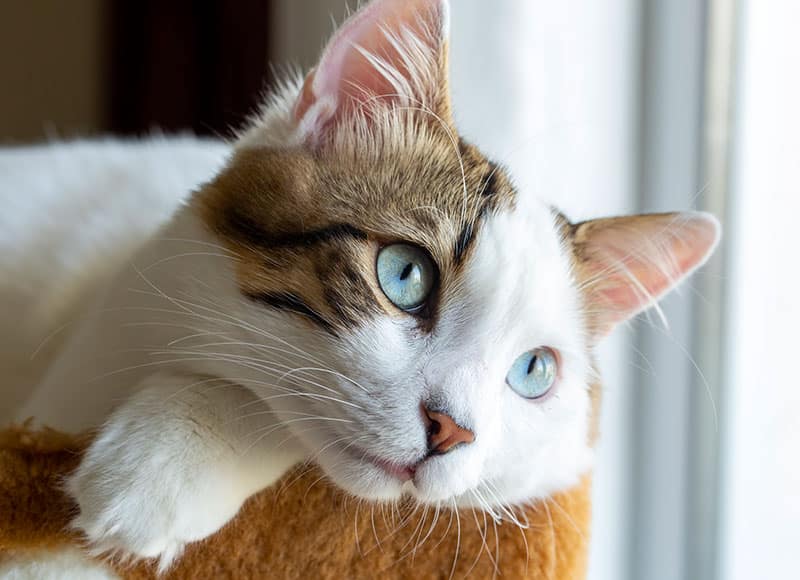
Close-up of a cat with blue eyes, a white face, brown and black markings, resting its head and paw on a soft surface near a window, looking outside.